
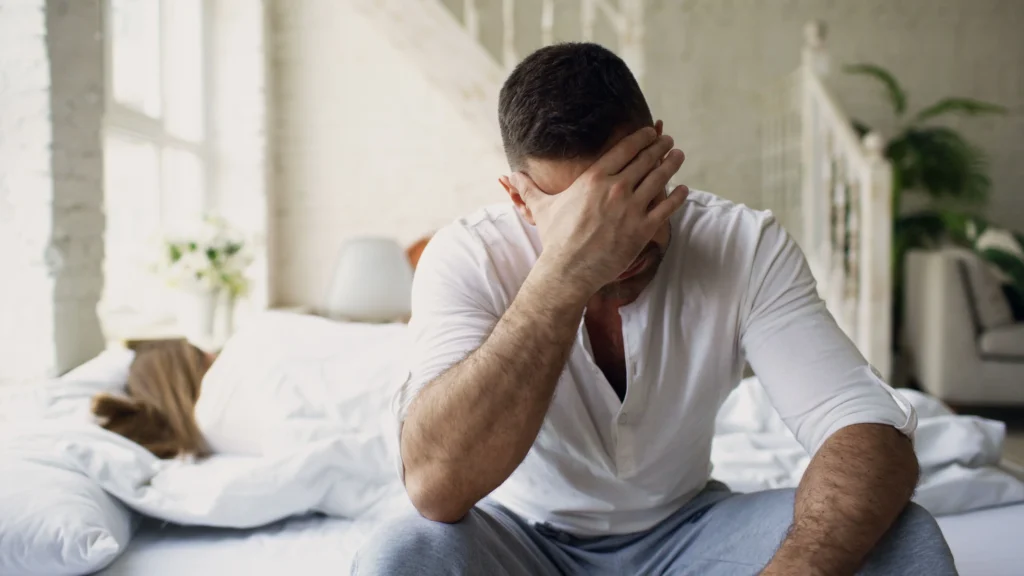
You are in your 20s or 30s. You are healthy. You exercise. You eat well enough. And yet, when the moment comes, your body does not respond the way you expect it to.
You lie there wondering what is wrong with you. You tell yourself it was just a one-off. But it happens again. And again. Each time, the fear of it happening makes it more likely to happen.
I am Nariman Al-Aloosi, a psychosexual therapist based in Kent. I work with young men who experience erectile dysfunction every week. And the first thing I tell each of them is this: you are not broken. This is far more common than you think. And in most cases, the cause is not physical.
Let me walk you through why erectile dysfunction happens in your 20s and 30s, what keeps it going, and how you can move past it.
How Common Is Erectile Dysfunction in Young Men?
Erectile dysfunction in young men is far more common than most people realise. There is a widespread belief that ED only affects older men. This is simply not true.
What the Research Says About ED Under 40
A study published in The Journal of Sexual Medicine found that 26% of men seeking help for erectile dysfunction were under the age of 40 (Capogrosso et al., 2013). Nearly half of those young men reported severe ED. That is not a small number.
Further research shows that around 8% of men aged 20 to 29 and 11% of men aged 30 to 39 experience some form of erectile difficulty. A review by researchers at King’s College London confirmed that erectile dysfunction is “exceptionally common” in men under 40.
In the UK, the numbers are rising. ED rates have doubled over the past 25 years. A survey of British men found that six in ten had avoided sex at some point because of performance anxiety. Among men aged 25 to 34, nearly 75% reported experiencing erection difficulties at least occasionally.
These are not rare cases. This is a pattern. And it is growing.
Why Does Erectile Dysfunction Happen in Your 20s and 30s?
When a man in his 60s or 70s experiences ED, the cause is often physical. Blood vessels narrow with age. Circulation slows. Conditions like diabetes or heart disease play a role.
But when a man in his 20s or 30s loses his erection, the cause is usually psychological. Your body is physically capable. The problem is what is happening in your mind.
Here are the most common reasons I see in my practice.
Performance Anxiety and the Pressure to Perform
This is the single most common cause of erectile dysfunction in young men I work with. Performance anxiety affects up to 25% of men, and it creates a vicious cycle that is hard to break alone.
It often starts with one failed experience. Maybe you had too much to drink. Maybe you were nervous with a new partner. Maybe you were tired or stressed. Whatever the reason, you lost your erection. And your brain recorded that moment.
The next time you are intimate, part of your mind is watching. Monitoring. Waiting for it to happen again. You are no longer present in the moment. You are spectating your own performance. And that mental shift, that self-surveillance, is enough to prevent arousal.
The more you worry about losing your erection, the more likely you are to lose it. This is the anxiety-ED cycle, and it is the most common pattern I see in young men who come to me for help.
Stress, Depression, and Mental Health
Your brain is your most important sexual organ. When it is overloaded with stress, it struggles to switch into arousal mode.
Stress triggers your sympathetic nervous system. This is your fight-or-flight response. It floods your body with cortisol and adrenaline. These hormones constrict blood vessels and suppress the relaxation response you need for an erection.
Depression has a similar effect. It dulls desire. It drains energy. It creates a fog that disconnects you from physical pleasure. Research shows that up to 20% of men have experienced ED linked to a negative mental health state.
If you are dealing with anxiety or depression, your erection difficulties may be a symptom of something deeper, not a standalone problem.
The Impact of Pornography on Sexual Expectations
This is a topic I discuss with many of my younger clients. I want to be clear: pornography does not “cause” erectile dysfunction in a simple, direct way. The relationship is more complex than that.
What pornography can do is reshape your expectations of sex. If you have spent years watching highly produced, exaggerated sexual content, real intimacy with a real person can feel different. Less intense. Less visually stimulating.
Some men find they can maintain an erection while watching pornography but struggle with a partner. This is sometimes called “porn-induced erectile dysfunction,” though the clinical research is still developing. What I see in practice is that heavy pornography use can create a gap between fantasy and reality that makes real-world arousal harder.
It can also feed performance anxiety. If you compare yourself to what you see on screen, you set yourself up for self-doubt. And self-doubt is the enemy of arousal.
Relationship Problems and Emotional Disconnection
Sex does not exist in a vacuum. It happens within the context of a relationship, even a new one.
If there is unresolved conflict between you and your partner, it affects intimacy. If you feel criticised, rejected, or emotionally distant, your body may struggle to respond sexually.
I often see men who have no physical problems at all but who experience ED specifically with their partner. This usually points to something relational. Trust issues. Communication breakdowns. Unspoken resentment. Fear of vulnerability.
In these cases, couple therapy alongside psychosexual work can make a significant difference.
Lifestyle Factors That Affect Erections
Your daily habits have a direct impact on your sexual function. Even in your 20s and 30s.
Alcohol. A few drinks may reduce inhibitions. But alcohol is a depressant. It slows nerve signals, reduces blood flow, and impairs arousal. Regular heavy drinking is a well-established cause of erectile difficulty.
Smoking. Nicotine damages blood vessels and restricts circulation. Studies show that men who smoke are significantly more likely to experience ED than non-smokers.
Poor sleep. Testosterone production peaks during deep sleep. If you are chronically sleep-deprived, your testosterone levels drop. So does your ability to maintain an erection.
Lack of exercise. Regular physical activity improves blood flow, boosts testosterone, and reduces stress. A sedentary lifestyle does the opposite.
Recreational drug use. Cannabis, cocaine, MDMA, and other substances all affect sexual function. Research published in The Journal of Sexual Medicine found that marijuana users were twice as likely to experience ED.
Physical Health Conditions to Rule Out
While psychological causes dominate in younger men, it is important to rule out physical factors. This is something your GP can help with.
Conditions that can cause ED in younger men include:
- Low testosterone levels
- Diabetes (even early-stage or undiagnosed)
- High blood pressure
- Thyroid disorders
- Neurological conditions
- Side effects of medications, including some antidepressants (SSRIs)
If your ED came on gradually and you still get erections during sleep or on waking, the cause is very likely psychological. If it came on suddenly with no erections at all, a medical check is worth doing.
The Anxiety-ED Cycle: Why It Gets Worse Without Help
This is something I explain to almost every young man I work with. Understanding this cycle is the first step to breaking it.
How One Bad Experience Creates a Pattern
Here is how it usually goes:
- You experience an erection failure. It could be for any reason: stress, tiredness, alcohol, nerves.
- You feel embarrassed. Ashamed. You start worrying about it.
- The next time you are intimate, you are thinking about whether it will happen again.
- That worry activates your stress response. Cortisol rises. Blood flow to the penis reduces.
- You lose your erection again. Or you cannot get one at all.
- The pattern confirms your fear. You now believe something is wrong with you.
- You start avoiding intimacy. Or you try to “push through” with more pressure on yourself.
- Each failed attempt makes the next one harder.
This is a psychological loop. Your body works fine. Your mind is getting in the way. And the longer this loop runs, the more ingrained it becomes.
The good news is that this cycle is very treatable. Because the cause is psychological, the solution is too.
When Should You Seek Help for Erectile Dysfunction?
Many men wait years before seeking help. A study presented at the European Association of Urology Congress found that most men with ED receive no treatment at all. This is often because of shame, embarrassment, or the belief that they should just “get over it.”
Signs That ED Is More Than a One-Off
Consider seeking help if:
- You have experienced erection difficulties on multiple occasions over the past three months
- You find yourself avoiding sexual situations because of fear
- The problem is causing distress or affecting your relationship
- You notice you are withdrawing from your partner emotionally
- You rely on alcohol or other substances to feel confident enough for sex
- You have started to doubt yourself as a man or as a partner
You do not need to wait until the problem is severe. In fact, the earlier you address it, the easier it is to resolve.
How Psychosexual Therapy Helps Young Men With ED
This is my area of expertise, and it is where I see the most consistent results with young men. Psychological treatment for erectile dysfunction addresses the root cause, not just the symptom.
What Happens in a Psychosexual Therapy Session
If you have never been to therapy before, the idea of talking about sex with a stranger can feel uncomfortable. That is completely normal. Let me explain what actually happens.
In our first session, we talk about your history. Not just your sexual history, but your broader life. Your relationships. Your stress levels. Your mental health. Your upbringing and how sex was talked about, or not talked about, in your family.
This helps me understand the context. Erectile dysfunction does not happen in isolation. It connects to how you think about yourself, your body, intimacy, and vulnerability.
We then work together to identify the specific thoughts, beliefs, and behaviours that maintain the cycle. This is structured and goal-oriented. It is not lying on a couch talking about your childhood for months on end.
Techniques That Help Break the Cycle
Several evidence-based approaches work well for erectile dysfunction in young men:
Sensate focus exercises. Originally developed by Masters and Johnson, these structured touch exercises remove the pressure of “performing.” You and your partner engage in physical intimacy with specific rules: no goal, no expectation of intercourse. This teaches your body to respond to pleasure instead of pressure. It is one of the most effective techniques in psychosexual therapy.
Cognitive restructuring. This involves identifying and challenging the negative thoughts that fuel anxiety. Thoughts like “I am going to fail” or “she will think I am less of a man” are examined, tested, and replaced with more realistic ones.
Mindfulness and body awareness. Learning to stay present during intimacy instead of “spectating” is a skill. Mindfulness techniques help you tune into physical sensation rather than anxious thoughts.
Gradual exposure. We work step by step to rebuild your confidence. This is not about forcing yourself to perform. It is about creating safe experiences where your body can relearn that intimacy is safe.
If you have a partner, involving them in therapy can accelerate progress. Research shows that couple therapy alongside psychosexual work improves outcomes for both partners.
Other Treatment Options for ED in Young Men
Therapy is not the only option. A good treatment plan is often a combination of approaches.
Lifestyle Changes That Make a Real Difference
Before reaching for medication, consider what your body actually needs:
- Cut back on alcohol. Even moderate reduction can improve erection quality within weeks.
- Stop smoking. Vascular improvement begins within days of quitting.
- Move your body. Aim for 150 minutes of moderate exercise per week. Cardiovascular exercise directly improves blood flow.
- Prioritise sleep. Seven to nine hours supports healthy testosterone levels and stress recovery.
- Reduce pornography use. If you suspect a gap between your response to porn and your response to a real partner, try a break. Many of my clients notice improvement within a few weeks.
- Manage stress actively. Whether that is through therapy, meditation, exercise, or simply saying no to overcommitment.
These changes are not dramatic. But they compound. I have seen men resolve their ED entirely through lifestyle adjustments alone.
When Medication Might Be Appropriate
PDE5 inhibitors like sildenafil (Viagra) and tadalafil (Cialis) work well for many men. They improve blood flow to the penis and can help you get and maintain an erection.
But for young men with psychological ED, medication alone often is not enough. It treats the symptom, not the cause. You may get an erection with the pill, but the anxiety and self-doubt remain.
I sometimes recommend medication as a short-term confidence bridge alongside therapy. It can break the cycle of failure and give you positive experiences to build on. But the goal is always to reach a point where you do not need it.
Speak to your GP about whether medication is appropriate for you. And be honest with them. Many young men feel embarrassed to ask, but GPs see this every day.
You Are Not Alone in This
If you are a man in your 20s or 30s dealing with erectile dysfunction, I want you to know this: you are not alone. You are not broken. And this is not something you have to live with.
I have worked with hundreds of men who sat where you are now. Confused. Embarrassed. Wondering if something is permanently wrong with them. Almost all of them got better. Most of them got better faster than they expected.
Erectile dysfunction in young men is common, it is well understood, and it is treatable. The hardest step is the first one: admitting you need help and reaching out.
If you are ready to take that step, I offer psychosexual therapy and individual therapy from my practices in Maidstone, Tunbridge Wells, and Kings Hill, West Malling. Sessions are available in person and online.
Get in touch today to book a confidential initial consultation.
Frequently Asked Questions
Can erectile dysfunction be cured in young men?
Yes. When the cause is psychological, which it is in the majority of young men, erectile dysfunction is very treatable. Psychosexual therapy, lifestyle changes, and sometimes short-term medication can resolve the issue. Many of my clients see significant improvement within 6 to 12 sessions.
Is erectile dysfunction in your 20s normal?
It is more common than you might think. Research shows that around 8% of men aged 20 to 29 experience some form of ED. Occasional difficulty with erections is not unusual, especially during periods of stress or with a new partner. If it becomes a recurring pattern, seeking help early gives you the best chance of a quick recovery.
How do I know if my ED is psychological or physical?
A helpful indicator is whether you still get erections during sleep or when you wake up in the morning. If you do, the physical mechanism works fine, and the cause is very likely psychological. Performance anxiety, stress, and relationship issues are the most common psychological causes in young men. Your GP can run tests to rule out physical conditions if you are unsure.
Can stress alone cause erectile dysfunction?
Absolutely. Stress activates your fight-or-flight response, which floods your body with cortisol and adrenaline. These hormones constrict blood vessels and suppress the relaxation response needed for an erection. Work stress, financial pressure, relationship strain, and general life overwhelm can all contribute to erectile difficulties, even when there is nothing physically wrong.